
The stress associated with getting a loan and then paying it back can be substantially cut down if you plan well and understand the factors associated with the education loan


The rubber and tourism industries in the state, to which the bank has exposure, have been hit.
'Once the lockdown is lifted, we will see some pickup in demand.' 'And my sense is that it will be a long walk this time given that we have lost three months of economic activity.'

Banks are in the process of getting a board-approved restructuring framework in line with the RBI's framework and eligibility defined by the central bank.

Rajesh Srivastava from Greater Noida shares his suggestions.

According to Fitch, the scheme could open a window for banks to build capital buffers while putting off full recognition of COVID-19 pandemic's impact on loan portfolios, but is reminiscent of a strategy adopted over 2010-2016 that delayed and exacerbated problems for banks.
Finance Minister Chidambaram has announced a moratorium period for all education loans taken-up to 31.3.2009 and outstanding on 31.12.2013.

Due to the prevailing uncertainty, the risk of loans going bad has certainly increased. This may result in lenders following risk-based pricing more diligently, notes Naveen Kukreja, CEO, Paisabazaar.com

Unlike the earlier experience post the global financial crisis, where nearly 90 per cent of the restructuring happened in the corporate loans, the non-corporate segment, which includes small businesses, agricultural loans and retail lending, will account for a higher share this time.

A habitual defaulter may find his/her chances of getting a loan in the future derailed.
Public sector banks, including the country's largest lender State Bank of India (SBI), have come out with a templated approach for restructuring retail and small business loans of up to Rs 25 crore under the Reserve Bank of India's (RBI) Covid restructuring package 2.0. They have also come out with standardised products to make funds available to business entities for improving healthcare infrastructure and to individuals for meeting Covid treatment expenses. Business loans have been divided into three categories.

Banks' bad loans might cross Rs 10 lakh crore by the end of this fiscal, mainly on account of slippages in retail and MSME sectors, a study said on Tuesday. "NPAs are expected to rise to 8.5-9 per cent by March 2022, driven by slippages in retail, Micro, Small and Medium Enterprise (MSME) accounts, besides some restructured assets," the study by industry body Assocham and ratings firm Crisil said. The study titled 'Reinforcing the Code' said the Gross Non-Performing Assets (GNPAs) of banks are expected to cross Rs 10 lakh crore by March 2022.
Gross bad loans of banks may rise from 6.9 per cent in September 2021 to 8.1-9.5 per cent by September 2022 if the Omicron variant strikes the economy hard, as per the financial stability report of the Reserve Bank released on Wednesday. The report also said that the rising stress level in the retail loan portfolio of banks -- the mainstay of bank credit for many years now -- was led by home loans, which grew in double-digits so far this fiscal. While asset quality improved, with gross non-performing assets (GNPA) and net NPA (NNPA) ratios declining to 6.9 and 2.3 per cent, respectively, in September 2021, the slippage ratio inched up during the same period as private sector banks showed a higher rate of deterioration in asset quality, as per the report.

Sell the property if bought for investment purpose.
Global rating agency Standard & Poor's said on Thursday United Western Bank's huge bad loans may affect IDBI's financial profile negatively.

Banks have started refunding borrowers the compound interest charged on specified loan accounts during the moratorium period. Last week, the Reserve Bank of India (RBI) had asked all lending institutions, including non-banking financial companies, to ensure that the scheme of waiver of interest on interest for loans up to Rs 2 crore for the six-month moratorium period is implemented by November 5.

Banks and financial institutions provide 6-12 months of additional time, beyond which you need to negotiate.
In an online chat with Get Ahead readers July 8, financial expert Anil Rego answered their queries on education loan. Here is the chat transcript

The one-time restructuring of loans will help every firm and prevent cost-cutting measures such as lay-offs.

Make your child understand that non-repayment of the loan puts all of it at risk
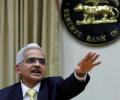
With many getting payment reminders, confusion prevails among borrowers, term-plan investors and credit cardholders over the implementation of the three-month moratorium on all loan repayments amid disruptions caused by the coronavirus outbreak. As part of measures to alleviate hardships faced by people, the Reserve Bank of India, on March 27, announced a slew of steps, including a three-month moratorium on loan repayments.

Lenders have lined up a number of home loan products that can fit every aspirant's annual income.
Lenders have lined up a number of home loan products that can fit every aspirant's annual income.

In a note to customers, the country's largest lender State Bank of India said, 'Interest shall continue to accrue on the outstanding portion of the term Loan during the moratorium period'. The accrued interest will be collected by the lender in the form of additional EMIs from those borrowers who opt for the three-month moratorium.

The asset quality of non-banking financial companies (NBFCs) deteriorated in April-September 2021 (H1FY22) owing to the second wave of the pandemic. Their gross non-performing assets (NPAs) rose to 6.8 per cent in September 2021 from 6 per cent in March 2021. The Reserve Bank of India's (RBI's) annual Trend and Progress report (FY21) said the sector might have to grapple with higher delinquencies as and when policy measures unwound. The pandemic posed significant challenges to NBFCs during the first wave (2020) also.

Lenders had filed 1,251 cases to recover Rs 24,765.5 crore. Wilful defaulters are the entities that do not pay back money despite the ability to do so. Defaulters above Rs 1 crore were considered for this exercise.

'We believe there will be a full shutdown for four weeks and a partial shutdown for eight weeks.' 'Hence, economic activity is unlikely to normalise before the end of May.'

Personal loans have about 80 per cent share in exposures restructured under regulatory package 2.0 by eight banks who have declared results for the second quarter. The remaining 20 per cent are loans to individuals used for business and credit to MSMEs. The total recast exposure of these banks under One Time Restructuring (OTR 2.0) was Rs 27,708 crore.

The stimulus measures include extension of the 90-day moratorium on recognition of impaired loans to 180 days, in addition to several relaxations in bank lending limits, including allowing banks to fund interest on working capital loans.

With the fresh wave of COVID-19 plunging the hospitality sector back into uncertainty, industry body HAI on Monday said it has asked the government to consider granting infrastructure status to hotels, extend moratorium on loans and rationalise taxes. In its pre-Budget memorandum, the Hotel Association of India (HAI) said policy interventions are imperative for the sector's survival and its early and quick rebound to normalcy. "The hospitality industry was slowly getting into a recovery mode on the strength of domestic tourism - leisure and events, only to be plunged back into uncertainty on account of the Omicron threat.

Go First chief executive officer Kaushik Khona and tribunal-appointed interim resolution professional Abhilash Lal on Thursday reached out to the airline's staff, seeking their support for revival. While Khona said the company had taken all steps for the airline's revival, Lal put forward the view it would have to raise funds. Employee engagement took place a day after the National Company Law Tribunal (NCLT) admitted the airline's insolvency plea on Wednesday and ordered a moratorium on recoveries.
How much will the banks' bad assets grow in March? It could be anywhere between Rs 1.2 trillion and Rs 2 trillion, observes Tamal Bandyopadhyay.
Industry fears waiver of interest on interest would distort credit culture, may encourage borrowers who can pay to defer repayment.

Axis Bank and ICICI Bank consumed 37-59 per cent of their operating profit for COVID-19 provisioning, while the figure is 24 per cent in case of Kotak Mahindra Bank and 10-12 per cent for IndusInd Bank and HDFC Bank.

What made the tide turn in favour of the Adani group was the Covid-19 pandemic, which shut down airports the world over, including Mumbai. There was no cash flow and the firm started defaulting on salaries July onwards.
A dummy's guide to all you must know about before availing an education loan

Experts say the focus is on preserving liquidity as there is uncertainty over the duration and impact of the 21-day nationwide lockdown imposed to check the spread of COVID-19.

Those who have been handed the pink slip shouldn't make too many loan queries, advises Raj Khosla.

Yes Bank users can now make over Rs 2 lakh payments towards loans, credit cards via other bank accounts.
